How to Store Handbags: Support the Shape and Keep Them Dry
A beautiful closet display can be a poor resting place for a handbag. If a shelf crushes the handles or a hook carries the bag’s weight for months, visibility has won at the expense of support. Start with the bag’s resting shape, then fit the storage system around it.
What does a storage space need to pass?
A suitable space supports the bag without pressure and keeps it away from avoidable moisture, heat, and light. Inspect the actual shelf or drawer before buying organizers: a neat-looking container does not automatically create a suitable environment.
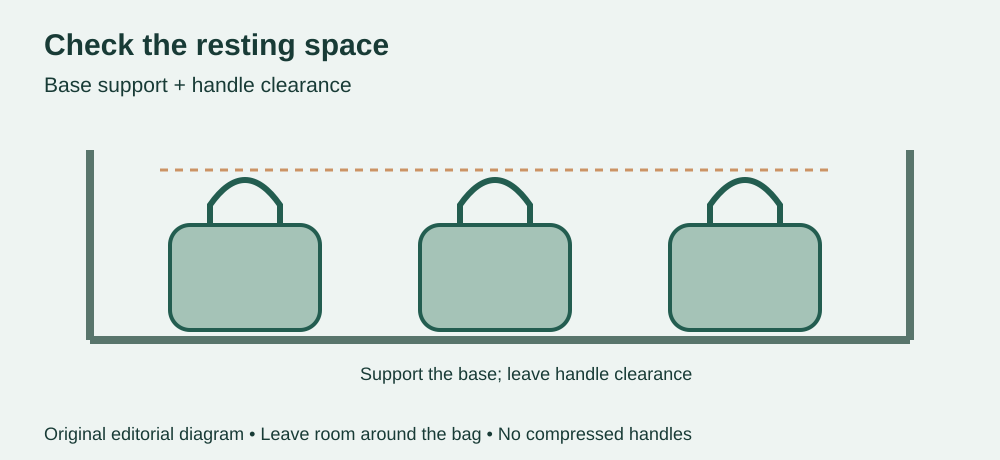
Check the base width, usable depth, and clearance above the handles. Open and close the door or drawer to see whether anything touches the bag. Look for a nearby radiator, a sunny window, or evidence of dampness. Coach’s storage guidance recommends a cool, dry location, gentle shape support, and a breathable covering. Those principles are a useful starting point; the bag’s own material instructions still take priority, especially for unusual finishes or embellishments.
How should you store handbags between uses?
Store handbags empty, supported, and loosely covered.
Rest each dry bag on a suitable base, add gentle shape support if needed, separate hardware from delicate surfaces, and leave enough room to retrieve it without squeezing.
The goal is to preserve the shape the bag naturally holds, not to stuff every corner until it becomes rigid. Open the cover often enough to notice a problem, with checks guided by your home’s conditions rather than an invented universal schedule. A humid closet, recent spill, or new storage location deserves closer attention.
Keep daily bags within easy reach so you can remove them without dragging their corners past other items. Put occasional bags farther back only when you can still inspect them. If the arrangement works only while every bag is perfectly aligned, give it more space; storage should remain forgiving during a rushed weekday morning.
Is the bag ready to put away?
A bag is ready when its contents are removed and any permitted cleaning has fully dried. Check the small pockets as well as the main compartment: a forgotten pen, cosmetic tube, or snack can create trouble during an otherwise careful storage routine.
Do not condition every bag simply because the season is changing. Coach’s care information distinguishes materials, and a treatment permitted for one finish may be wrong for another. Address visible soil using the exact maker’s guidance, or consult Bera Bags’ leather handbag cleaning guide before choosing a method. If a bag is damp, postpone enclosure rather than trying to hide the moisture with scented sachets. Storage cannot correct an unresolved cleaning problem.
How much stuffing is enough?
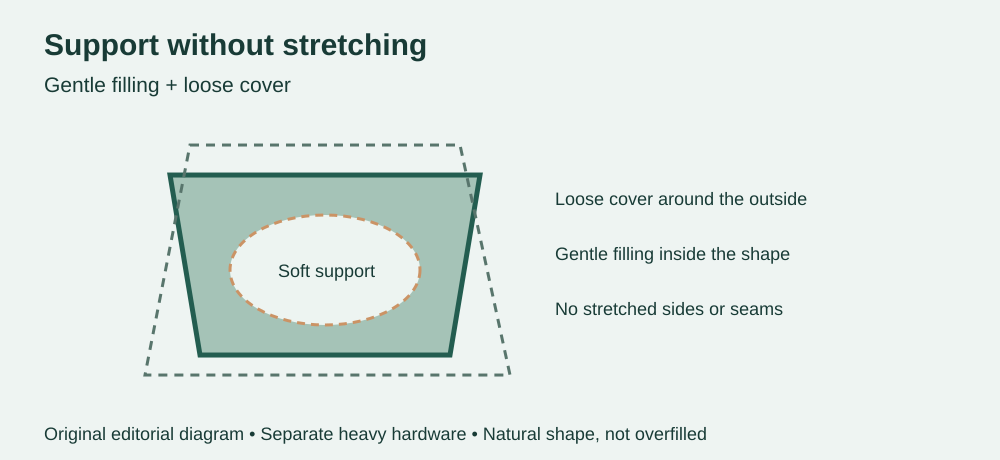
Use only enough support to prevent unwanted collapse without stretching the body or seams. A structured bag may need light filling; a deliberately slouchy style should not be forced into a box shape. Close the bag normally and check that the support does not push against the zipper.
Aspinal’s handbag care guidance recommends gentle filling with plain, acid-free tissue and protection for hardware during extended storage. The word gentle matters more than filling volume. Avoid printed paper against pale linings and hard objects that create ridges. Remove or reposition support if the side panels bulge. Reusable inserts can be convenient, but their shape and pressure matter: an insert that fits another bag may not fit this one.
Which cover should you choose?
Choose a clean, roomy cover that suits the bag’s material guidance. The original dust bag is a sensible first option because it was supplied for that item. If it is missing, a plain clean cotton alternative may work, provided it does not compress the handles or transfer color.
Avoid treating a sealed plastic container as the default for leather storage. It can hold moisture in the very space you wanted to protect. A breathable cover is not climate control, however: placing it in a damp cupboard does not solve the cupboard’s problem. Keep coverings dry, label the shelf rather than attaching adhesive to the bag, and leave enough slack to lift the cover off without scraping hardware along the leather.
Shelves, drawers, hooks, or boxes: which suits the bag?
Base-supported storage usually offers the clearest way to avoid prolonged strain on handles. The right format then depends on the bag’s structure, the available clearance, and how often you use it. Compare the actual contact points, not just how many bags the organizer claims to hold.
| Format | Support and clearance | Access | Main caution |
|---|---|---|---|
| Open shelf | Supports base; allow handle height | Easy to inspect and retrieve | Control dust and direct sunlight |
| Drawer | Works only when depth suits resting shape | Good for small items | Closing can crush raised handles |
| Hook | Load rests on strap or handle | Convenient for brief use | Avoid prolonged loaded hanging |
| Roomy covered shelf space | Base support with loose dust cover | Needs labels or a simple index | Still requires a dry, suitable location |
A compact clutch may fit a drawer that a structured top-handle bag cannot. Do not flatten the second bag merely to make the same system serve both.
How do you keep straps and hardware from leaving marks?
Arrange straps and hardware so they do not press into the bag or a neighboring item. Detach a strap only when its fittings are designed for that purpose. Otherwise, position it in a relaxed curve without forcing a sharp fold at the attachment.
Heavy chains, buckles, and charms can create concentrated contact points. Place a clean, suitable barrier between them and a delicate surface, and check that the barrier itself is not bulky enough to deform the bag. Pale and dark finishes should not sit tightly against each other. Avoid wedging bags upright between rigid dividers: a divider should keep items apart, not squeeze them into a narrower footprint than their natural shape.
What changes in a small closet?
In a small closet, reduce wasted space without reducing the bag’s necessary clearance. Measure one bag at a time and assign a location that accepts its normal resting shape. A shelf with adjustable height can be more useful than a densely packed hanging organizer.
Keep frequently used bags near the front and make occasional bags identifiable through shelf labels or a simple photograph index. Do not nest a heavy bag inside a delicate one just to reclaim a shelf. Empty removable pouches separately when appropriate, and keep their contents together so switching bags does not become a search through the closet. If the collection exceeds the safe space available, rotate which bags occupy the accessible area rather than compressing them all into it.
What should you check after storage?
Inspect the bag before loading it, especially after a long rest or a change in room conditions. Look for trapped moisture, new impressions, stuck surfaces, color transfer, or a strap caught beneath the base. Do not dismiss an unfamiliar smell by adding fragrance.
Where damage or a material problem appears, stop using the same storage arrangement until you understand the cause. Mulberry’s care and repair guidance offers a route for assessment of its own bags; another maker may have a different process. Ask what can be assessed before shipping anything. No storage method guarantees against deterioration, and a tidy-looking exterior does not prove that a damp lining or hidden pocket is sound.
Build a routine you can actually keep
The useful storage system is the one you can reset after a normal day. Give each bag enough space, keep suitable support nearby, and make emptying it easier than leaving it packed. That small routine is more dependable than an elaborate display that is awkward to use.
Begin with the bag you carry most often and check its base, handles, cover, and contents. Adjust the space around that bag before buying a closet full of matching organizers. For related care choices, keep the original material instructions alongside your storage notes. If your material instructions contradict a general storage tip, follow the material instructions and ask the maker about the specific conflict.
FAQ
Is an expensive storage organizer necessary?
No. An ordinary clean shelf can work when it provides enough support, clearance, and a suitable environment. The price of an organizer says little about whether it fits your bags. Measure the available space and inspect the edges and contact points before buying. Spend on a solution to a specific problem, such as inadequate shelf clearance, rather than assuming a specialized label makes every organizer safer for leather.
Can I leave a handbag packed overnight?
For a short pause, consider what is inside and how the load sits. Remove anything that could leak and avoid leaving heavy objects pressing against delicate panels. For longer storage, emptying the bag is the more useful baseline because it lets you inspect the lining and support the shape deliberately. An overnight routine and several months of storage do not need to be treated as identical situations.
Should every bag be stored standing upright?
No single position suits every construction. A structured handbag may rest naturally on its base, while another item needs a different supported position under its maker's instructions. The test is whether the chosen position creates folds, pressure, or strain. Do not force a soft bag to stand by overstuffing it, and do not lay a structured bag down if its hardware presses into a delicate panel.
Will a dust bag prevent mold?
A dust bag is a covering, not a solution for a damp storage environment. The handbag and cover need to be dry, and the surrounding space needs to suit the material. If you notice persistent dampness or possible mold, address the storage conditions and seek appropriate advice for the item rather than sealing it more tightly. Do not assume that adding a sachet makes an unsuitable closet safe.