How to Clean a Leather Handbag: Check the Finish Before You Start
The mark is small; the pale patch left by an improvised cleaner can be much bigger. Before rubbing a handbag with whatever is under the sink, find out whether you are treating dirt, a delicate finish, or damage that cleaning cannot reverse.
What must you identify before cleaning?
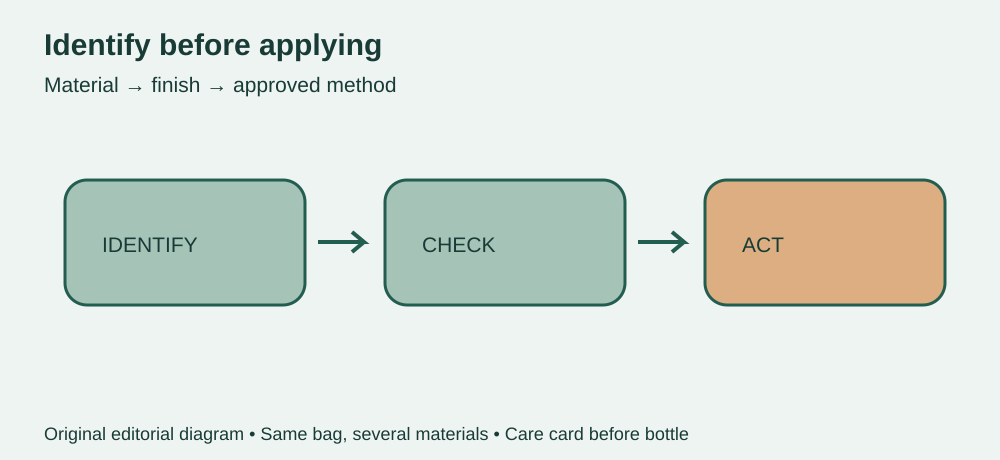
Identify the bag’s material and finish before choosing a method. A brand name alone is not enough: the same collection can include smooth leather, suede, coated canvas, and contrasting trim. Look for the original product listing, care card, material label, or model number. Ask the maker when those sources disagree.
The distinction is practical. A method allowed on the main body may be unsuitable for the handle coating or lining. Coach’s material-by-material guidance separates core leathers from specialty materials rather than treating every bag alike. The exact bag’s instructions should decide treatment; a broad material category cannot resolve its finish. Do not identify a finish by trying water, alcohol, or oil on it.
How do you clean a leather handbag safely?
Use only care approved for that bag’s finish.
Empty the bag, remove loose dust gently, check the cleaner’s exclusions, test as directed, and treat a small area only after the test has fully dried.
That sequence is deliberately more cautious than a universal soap-and-water recipe. Put the bag on a clean, nonabrasive surface and separate anything that might leak. If its maker permits a soft dry cloth, begin there and stop if the cloth picks up finish color or the surface becomes tacky. A dry wipe is not a guarantee for fragile, peeling, or embellished surfaces.
Only move on to an approved product when you know what it is intended to remove. Follow its quantity, application, residue-removal, and drying directions instead of combining advice from several brands. Work without saturating seams or pushing moisture into a lining. Afterward, assess the completely dry surface in ordinary light before deciding whether more cleaning is justified.
Which leather types need a different route?
Suede, nubuck, patent finishes, exotics, and unknown leathers need their own instructions. The word leather on a bottle does not establish compatibility with all of them. Nor does a smooth appearance prove that a bag has a protective coating.
For a concrete example, Mulberry Leather Gel excludes suede, nubuck, and patent leather. That exclusion belongs to this product; it is not a complete care guide for all three materials. A specialty brush may be appropriate for one maker’s suede and unsuitable for a decorated or damaged panel. If you cannot confirm the right route, collect the model information and ask the brand or a qualified leather-care specialist. Do not let a general cleaning tutorial override a stated exclusion.
What does a useful patch test look like?
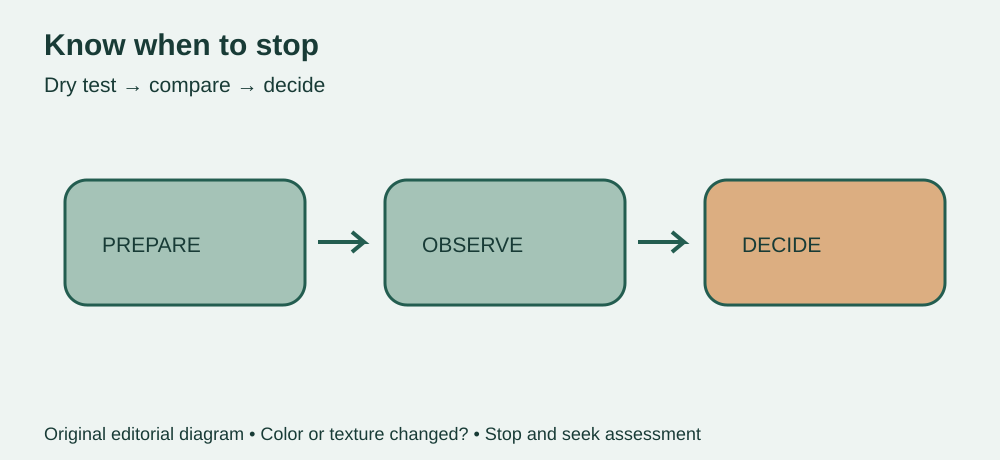
A useful patch test follows the chosen product’s directions and is checked after drying. Pick an inconspicuous area of the same material and finish, not an unrelated fabric pocket. Use the smallest directed amount and keep an untreated nearby area available for comparison.
Coach Leather Cleaner’s instructions specify an inconspicuous test with at least an hour of drying and exclude Sport Calf, suede, and haircalf. Those details are an example, not a universal timing rule. Your product may require something else. Look for a persistent change in color, sheen, texture, or flexibility. A failed test is a reason to stop, not to dilute the product and try a visible panel. Even a passed small test cannot guarantee a uniform result across worn or previously treated leather.
What should you do with a fresh spill?
For a fresh spill, avoid spreading it and consult the material’s care directions promptly. Do not scrub the wet patch outward, soak the rest of the bag to match it, or speed drying with a radiator or hair dryer. First protect nearby belongings and keep colored cloths from transferring dye.
Mulberry’s care guidance describes gently removing residual water and allowing its wet leather to dry naturally; this does not authorize washing a handbag. A sugary drink, oil, and rainwater also present different problems. If the substance is unknown or the finish changes immediately, stop home treatment. Record what spilled and which products, if any, touched it. Those details are more useful to a specialist than repeated attempts to make the mark disappear.
Can cleaning remove ink, dye transfer, or scuffs?
Cleaning cannot reliably reverse every mark, especially when the finish itself is damaged. A scuff may be missing color rather than dirt. Ink and clothing dye can require a different assessment from loose dust; scrubbing them as though they were surface soil can enlarge the affected area.
Avoid household solvent experiments and abrasive pads. They introduce a second problem without establishing what caused the first. Take clear photographs in consistent light and contact the maker before authorizing restoration, recoloring, or stain treatment. Ask what change in color or finish is possible and whether the proposed process is cosmetic repair rather than cleaning. A careful assessment may conclude that leaving a small mark alone is less risky than attempting complete removal.
Should conditioner follow every cleaning?
Conditioner should follow only when the exact leather and product instructions support it. Cleaning, conditioning, and protective treatment are separate decisions. Automatically adding an oil or cream can change the look of a bag that did not need it.
The exclusions on Coach Moisturizer differ from those on its cleaner, illustrating why a compatible cleaner does not automatically establish a compatible follow-up. If a general brand article and a specific product label conflict, ask the manufacturer to clarify before applying either. Avoid treating a fixed calendar interval as proof that the leather needs more product. Consider the bag’s instructions and actual condition, and do not use kitchen oils as substitutes for a material-specific recommendation.
How do you handle the lining, trim, and hardware?
Treat the lining, trim, and hardware as separate surfaces with separate risks. Empty each pocket and remove loose debris without pulling a sewn-in lining inside out. Check whether any detachable organizer has its own cleaning label before washing it.
Keep liquids away from leather edges while addressing fabric, and do not assume metal polish is safe near plated hardware or a painted logo. A cotton swab that carries a strong cleaner can still damage the surrounding finish. Choose a method that does not migrate between materials, or leave this work to a specialist. For the wider care routine, keep a separate note for each material; the model’s instructions should always control the specific cleaning decision.
What should happen after the bag dries?
Check the result in ordinary light before putting the bag back into use. Compare the treated area with the surrounding surface without repeatedly rubbing it. If a mark remains but the bag is stable, pause rather than escalating to a stronger product immediately.
Make a simple care record: material name, product used, test location, and any change observed. Keep that record with the original care card so the next cleaning starts from evidence. Return pens and cosmetics in closed pouches and deal with leaks before they become recurring stains. Cleaning is easier to judge when you are not trying to correct several layers of unknown treatments. If you notice flaking, stickiness, or color loss, seek an assessment rather than concealing it with conditioner.
Keep the next step smaller than the problem
A good cleaning decision sometimes ends after identifying the material or removing loose dust. The right stopping point depends on what the mark is, what the finish permits, and whether a cautious test changes the surface. There is no reward for completing every step when the bag does not need it.
Before returning a dry bag to the closet, remove the daily load and support it gently without forcing its shape. That prevents the care routine from ending with a new pressure crease or a spill left inside. Continue with Bera Bags’ handbag storage guide to plan its resting place. For stains or damaged finishes that remain uncertain, ask for a material-specific assessment rather than a stronger home remedy.
FAQ
Can I use baby wipes on a leather handbag?
Do not assume a wipe is suitable because it feels mild on skin. Its ingredients and the bag's finish may be incompatible, and a wipe label usually does not establish approval for your handbag. Check the bag maker's instructions and use a specifically permitted method instead. If a wipe has already changed the surface, stop applying products, keep the packaging, and describe the exposure when you ask for help.
Is a vintage handbag safe to clean at home?
Age alone cannot answer that question. A vintage bag may have an unknown finish, earlier recoloring, weakened lining, or previous treatments that change how a cleaner behaves. Identify the material and inspect its condition before proceeding. If it is flaking, sticky, brittle, or transferring color, seek an assessment. A small hidden test is still useful when a method is approved, but it cannot reconstruct the bag's treatment history.
Does a dark patch after cleaning mean permanent damage?
A dark patch can have more than one cause, so do not diagnose it while the area is still drying. Follow the product's drying directions and avoid adding heat or more cleaner. If the patch persists, document it and ask the manufacturer or specialist what to do next. Tell them the exact product and amount used. Trying another chemical immediately can make both the mark and its cause harder to assess.